
Project Helix Dossier: Asha talks about 'more flexible' Game Pass
The Xbox Series X and Series S have been anchoring Microsoft’s console ecosystem for years, which means the industry is quietly gearing up for what comes next.
This is a living dossier, meaning we will be adding new content as soon as we learn more.
While Microsoft has yet to lock in a public calendar date, major industry anchors have dropped massive indicators regarding the launch window. Most notably, internal timelines point toward alpha hardware distribution starting very soon.
"I’m excited to share we plan to ship alpha versions of the hardware to developers beginning in 2027." - Jason Ronald, Vice President of Next Generation, Xbox
Corroborating this timeline, the CEO of AMD dropped an undeniable confirmation during a recent corporate earnings call. As reported by PC Mag, development of Microsoft's next-generation Xbox architecture - which centers on an AMD semi-custom SoC (System-on-a-Chip) - is actively progressing to support a commercial launch in 2027.
While shipping alpha kits to developers in early 2027 and aiming for a retail release later that same year sounds incredibly tight, it is well within the realm of modern manufacturing possibilities. The days of consoles relying on bizarre, alien hardware architectures (like the PlayStation 3's infamous Cell Processor) are long gone. Because modern consoles mirror high-end PC environments, developers no longer have to reinvent the wheel to optimize their code, paving a smooth path toward a Holiday 2027 release window.
However, a volatile global hardware market remains the ultimate wild card. Due to severe, ongoing shortages in critical components like RAM and high-speed VRAM, it would surprise no one if Microsoft ultimately decides to insulate their supply chain and push the hardware out to 2028 (or later).
During an interview, Chief Strategy Officer Matthew Ball made it clear that Microsoft is aggressively rethinking every core pillar of the Xbox brand - a holistic review that directly encompasses Project Helix. This sweeping reassessment strongly suggests that while Microsoft previously might have aimed for a definitive 2027 hardware launch, those legacy timelines could now actively be re-evaluated.
[update] According to a leaked transcript obtained by Windows Central Xbox CEO Asha Sharma reaffirmed that Xbox is moving toward a broader hardware ecosystem rather than relying solely on a single traditional console. This strategy suggests Xbox will likely partner with third-party manufacturers for portable hardware, similar to PC handhelds like the ASUS ROG Ally:
"We are moving to a family of devices for Gen-10. There is not one device that fits all. We will certainly have a great console first, but we also know that many players will be on the go. There are some things that we are the best in the world to manufacture, and there are other things that we will partner on. So, we will be sharing more about that as our plans develop. The operating system is starting to look really good. We're very excited about this."
[original report] Historically, you would expect a next-generation successor to follow the exact blueprint laid out by the Xbox Series X|S - a traditional console box tethered to a closed garden. This time around, Microsoft is radically altering its playbook.
Project Helix is fundamentally designed to dissolve the boundaries between console hardware and PC gaming architecture. Jason Ronald, Vice President of Next Generation, expanded on this paradigm shift:
"As games increasingly span devices, we’re breaking down the barriers between console and PC games for more seamless cross-device play, and we’re making the Xbox experience consistent across screens. This also gives developers a simpler, more unified path to reach more players while helping reduce development costs." - Jason Ronald
To reinforce this direct trajectory, recently appointed Xbox CEO Asha Sharma took to X.com to clearly align the company's hardware ambitions with an open PC ecosystem:
Great start to the morning with Team Xbox, where we talked about our commitment to the return of Xbox including Project Helix, the code name for our next generation console.
— ASHA (@asha_shar) March 5, 2026
Project Helix will lead in performance and play your Xbox and PC games. Looking forward to chatting about… pic.twitter.com/Xx5rpVnAZI
This isn't just marketing speak; Microsoft is fundamentally reshaping the Windows operating system to act as the core engine for this generation. The company is taking everything it has learned from building a leading gaming console OS and injecting it directly into Windows.
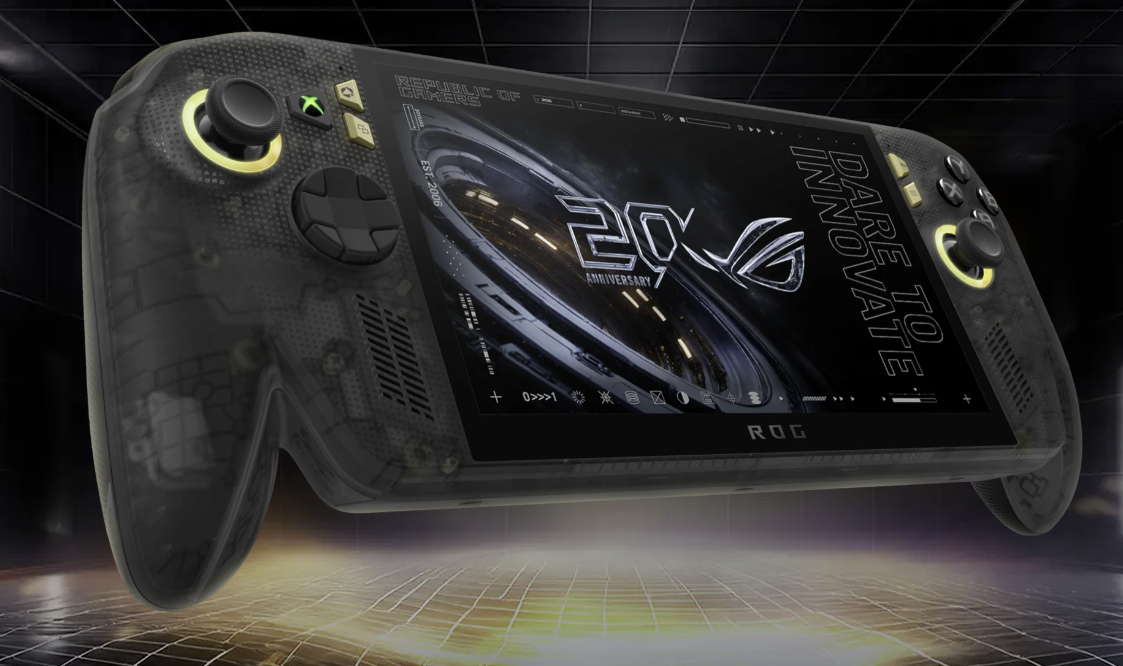
After debuting an early iteration of this software layout on the specialized ROG Xbox Ally handheld devices, Microsoft rolled out a dedicated "Xbox Mode" for Windows 11. This interface allows users to seamlessly toggle between standard desktop productivity and a controller-optimized, full-screen Xbox dashboard environment.
We have already seen Microsoft pre-sorting its ecosystem for this transition. Their partnership with Asus to deliver an "Xbox handheld" was, under the hood, a portable Windows PC dressed in a console user interface. Project Helix will be expected to represent the ultimate realization of this concept. Instead of buying a restrictive console, players are effectively purchasing a standardized, highly optimized, small-form-factor PC built to seamlessly run both native Xbox software libraries and standard PC ports.
If you are expecting Project Helix to land at a traditional $499 console sweet spot, you may want to temper your expectations. The hardware industry is currently enduring a severe pricing bottleneck that directly impacts retail costs. Under Asha Sharma's leadership, Xbox has been open about the immense financial headwinds facing next-gen development, signaling a complete overhaul of how they structure their hardware pricing.
“We are in a hardware component crisis. When I joined as CEO in February, the price we paid for console storage components was over 2x as high as we paid last fall. These costs have since doubled again. And as we plan for the 2027 holiday season, we expect another significant increase, taking us over 5x the prices we paid only two years earlier. Memory costs have followed a broadly similar trajectory. While the entire industry is facing a components crisis, we believe we have been impacted more greatly than many of our peers due to the choices we made over the last half decade. We are currently unable to make as many consoles as players want to buy, and we need a new business model and partnerships for hardware as we remain committed to Helix.” — Asha Sharma
During the current generation, Microsoft established a multi-tiered hardware approach with the Series X, Series S, and the handheld ROG Xbox Ally X. Given Sharma's warnings of a component crisis, Helix will almost certainly lean even further into a traditional PC tier model. Rather than heavily subsidizing a cheap box, Microsoft is pivoting to an premium, hardware-sustainable PC business framework, meaning Helix will likely launch as a high-end powerhouse with a premium price tag to match.
It all depends on the release window of Project Helix of course. Microsoft has not yet confirmed an official software lineup for the next generation, and we will refrain from reckless speculation regarding unannounced software. We do, however, have several concrete markers. Annualized juggernauts like Call of Duty (with guaranteed iterations locked for 2027 and 2028) and EA Sports FC are absolute certainties to help anchor the hardware launch window.
Looking at Microsoft’s first-party slate, several highly anticipated games currently targeting 2027 launch windows are prime candidates to showcase Helix's capabilities. Titles such as Clockwork Revolution, Senua and State of Decay 3 are all deep in production without finalized dates, making them natural cross-generation or native flagship titles for the new hardware.
Further out, Ark II is officially slated for a 2028 release, which might be a better candidate to release alongside the console. On the third-party front, Atlus’ rumored Persona 6 is heavily tipped for a 2027 debut. Then there is the massive elephant in the room: Bethesda’s The Elder Scrolls VI. Announced nearly a decade ago and largely missing in action since, launching Todd Howard’s next fantasy epic alongside the arrival of Project Helix would serve as the ultimate system-seller - though only time will tell if Microsoft pulls off such a massive maneuver.
Naturally, the arrival of Project Helix will trigger a massive wave of next-gen optimization patches for Microsoft's extensive catalog of existing live-service games and recent hits. Players can comfortably expect comprehensive hardware upgrades for games like:
Perennial industry evergreens like Fortnite and Minecraft will most likely receive native compatibility patches to leverage the new architecture, ensuring that the transition to Helix retains the player bases of the world's largest multiplayer sandboxes.
According to AMD’s official Advancing AI 2026 announcement, next-generation architectures like Zen 7 are slated for 2028, leaving Zen 6 as the primary candidate to power Microsoft’s upcoming Project Helix hardware.
AMD also outlined its long-term graphics strategy, confirming plans to unify its gaming and AI-focused GPU technologies under the UDNA architecture. While the company did not mention Microsoft's next-generation Xbox, the roadmap provides insight into the technologies that could be available for future console designs.
Rather than focusing solely on traditional rasterization performance, AMD’s roadmap places a stronger emphasis on dedicated AI acceleration and machine learning capabilities.
Key technologies highlighted by AMD include:
- Dedicated AI Compute: Future architectures will include expanded AI acceleration capabilities, enabling workloads such as neural upscaling and other machine learning applications.
- Unified UDNA Graphics: AMD aims to bring together advances from its gaming and data-center GPU technologies into a single architecture, with improvements across ray tracing, AI performance and software support.
- Long-Term Software Continuity: AMD's unified architecture is designed to simplify software development across future generations, although platform-specific compatibility remains the responsibility of hardware vendors such as Microsoft.
While Microsoft has yet to reveal specifications for its next-generation Xbox hardware, console development typically begins years before launch. AMD’s newly announced roadmap therefore offers an early indication of the technologies that may be available for future console designs, without confirming the hardware Microsoft ultimately plans to use.
This article was written by a human and fact-checked and edited by Gemini 1.5 Flash.
Editorial Standard: Drafted with AI assistance, thoroughly reviewed and published under GoodGamePass editorial supervision.
You might also like...

Aniimo Season 1 Part 2: Everything You Need To Know

Game & Hardware Sales Right Now

Subnautica 2 EA 2.0 Update: Frog Chassis, Dark New Biomes, and Movement Upgrades
Quarantine Zone: Miami Zero DLC Breakdown
ROG Xbox Ally X20 Anniversary Edition: Everything You Need to Know